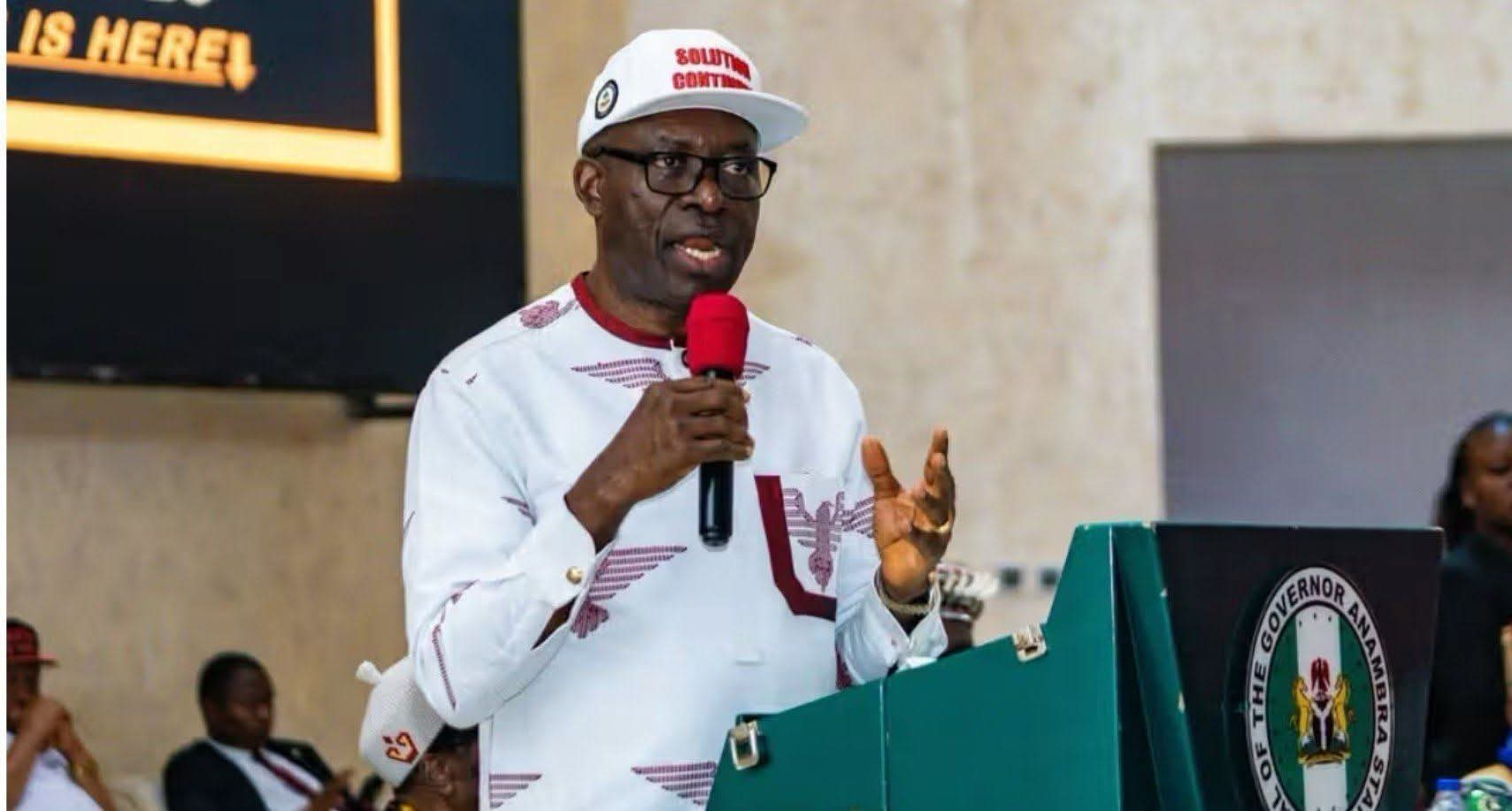
Soludo: I haven’t borrowed since becoming Anambra governor — but I can’t say never
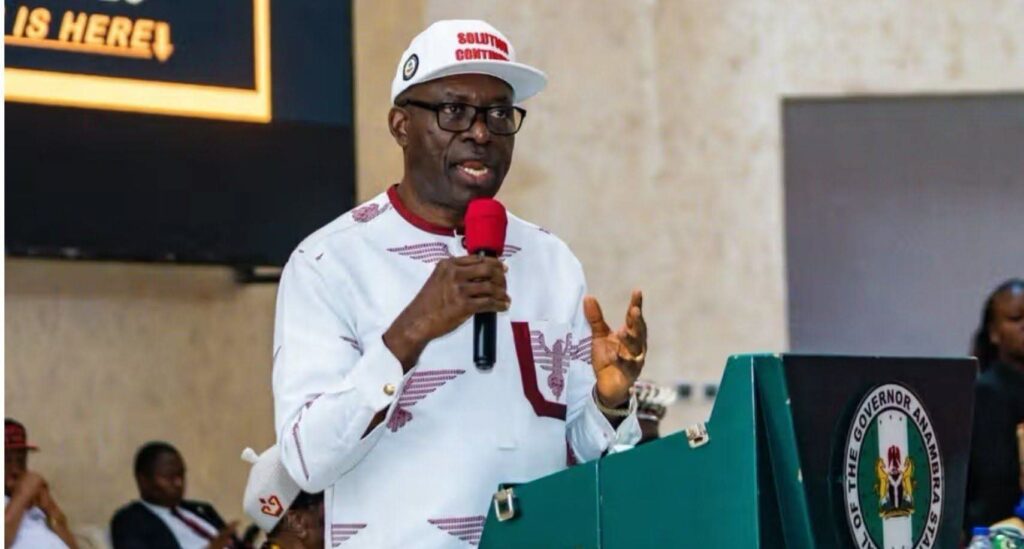
Chukwuma Soludo, governor of Anambra, says his administration has not borrowed any money since he assumed office.
Soludo, who said he could not rule out borrowing in the future, spoke on Monday at the Delta state economic and investment summit 2026 after Sheriff Oborevwori, governor of Delta, said his administration had not borrowed from any bank and had no intention of doing so.
“Despite the huge investment in improving public infrastructure, we have not borrowed a kobo from any bank, and we do not intend to borrow,” Oborevwori said.
Responding, Soludo said Anambra had also not borrowed but stopped short of making a similar commitment.
“I haven’t borrowed a dime since I became governor. But I will hesitate to make the other one that you added, which is that you will never,” Soludo said.
The Anambra governor said Nigeria’s macroeconomic environment had improved significantly, making borrowing less risky than it was when he assumed office.
According to him, Anambra withdrew from the World Bank-funded NG-CARES programme because exchange rate distortions at the time would have made the facility too expensive despite its low interest rate.
“When I became governor, I pulled Anambra state out of an ongoing World Bank loan, NG CARES, and Anambra was the only state that pulled out,” he said.
“The macro fundamentals, the foreign exchange, and the exchange rate distortions, were such that I told the World Bank that even at zero interest, it was still the most expensive fund in the world…
“If you were giving me money and I change it at N460 to the dollar today, when I know that tomorrow it will be over a thousand, even if you lend it to me at zero, the effective interest rate in it is over 100 percent.”
The governor said the situation had since changed, citing improved foreign reserves and a more stable exchange rate.
He said Nigeria had moved from experiencing capital flight to becoming better positioned to attract investment.
“And therefore, breaking the paradoxes of the Nigerian economy, we are a capital-scarce economy but prior to 2023, was having a massive capital flight, double jeopardy,” Soludo said.
“You have capital scarcity but also losing capital in droves. Today, it is more reversed.
“You now have net foreign exchange reserves of about a little over 40 billion and gross reserves of about $52 billion… and the exchange rate has become stable, more stable, predictable to a large extent.”
The governor said Nigeria and its subnational governments would require foreign capital to drive growth, adding that the current macroeconomic environment is more conducive to attracting investment.
“And therefore, Delta and Nigerian economy and sub-nationals will require foreign capital, be they Africa, be they from anywhere, will require foreign capital. And the environment, the macroeconomic environment, is more conducive today,” he added.
He, however, said Delta, as an oil-producing state, may be better positioned to avoid borrowing than many other states.
“Maybe Delta, you are my rich neighbour, you have a lot of oil money and so on. So, Delta can afford it. I’m not sure how many others can afford to do that,” he said.